
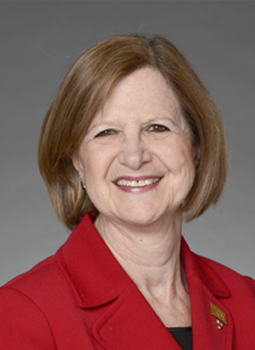
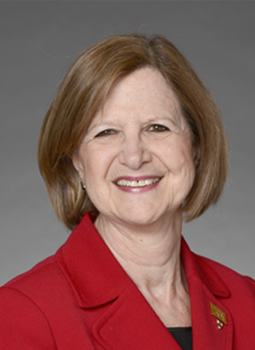
Dr. Doris Grinspun
Recently, I found myself reflecting on a conversation with a nursing student. She spoke with clarity and conviction about witnessing families navigating poverty, elders isolated from care, and communities facing environmental risks that rarely make headlines. She said something that has stayed with me: “As students, we are learning a lot… but sometimes I wonder if we are learning what people actually need.”
That question is not a criticism. It is a gift. It is a reminder that those closest to learning – and to care – often see most clearly what must change. And as a profession, we must listen attentively and respond with courage. The truth is this: the world is changing faster than our curricula.
Across Canada and around the world, we are witnessing profound shifts in population health needs, social unrest, widening inequities, pressures of climate change, and the relentless pace of technological change. These are not distant trends. They are realities that shape our lives today.
Nursing education must rise and lead with curricular innovation that honours our responsibility to society.
If our nursing education programs do not fully reflect social, cultural and health realities, they are not sufficient.
And at the heart of this work is a clear and uncompromising vision – to build nursing education that is innovative and equitable. We must prepare professionals who honour people-centred and evidence-based clinical knowledge and skills while advancing social transformation, health justice and sustainable development.
This is not aspirational rhetoric. It is a call to act.
Reimagining curricula for people and communities
We must be bold enough to ask ourselves: Whose realities are reflected in our curricula? Whose voices are missing? If our programs do not fully reflect social, cultural and health realities, they are not sufficient.
We must move decisively toward curricula grounded in primary care, intercultural understanding, environmental responsibility and risk awareness. Education must align with public health priorities and global commitments, including the United Nations’ Sustainable Development Goals, the world’s blueprint for peace and prosperity.
But even this is not enough.
We must also transform where learning happens. Community-based education, particularly in underserved and vulnerable contexts, must be at the centre of learning, not on its margins. When students learn within communities, they acquire knowledge and develop character, judgment, humility and the capacity to lead change that matters.
Innovation and equity must go hand-in-hand
We are living through an era of unprecedented technological possibility. But let us be unequivocal – innovation that discriminates and excludes is not progress. It is injustice.
If digital transformation leaves behind rural students, under-resourced institutions, or entire regions or populations, then we have failed in our societal duty. We must design systems that expand access rather than restricting it. Open platforms, shared simulation and hybrid models are essential, not optional.
Equity does not happen by chance. It happens by design – and by intention.
Knowledge generation as collective responsibility
If we are to lead, we must also generate the knowledge that shapes the future of care. A strong, collaborative research agenda is not an academic luxury. It is a professional obligation that must confront the realities of our regions, from public health challenges to gender inequities, racial and other forms of discrimination, ageing populations and a chronic disease epidemic.
We must cultivate a culture where inquiry is expected, where curiosity is nurtured, and where both students and educators see themselves as contributors to evidence that informs policy, practice and progress.
Nursing advances when researchers think, question and share.
Nurse educators are not simply delivering content. They are shaping how future nurses will think, act and lead.
Supporting those who teach
Transformation of this magnitude depends on one group above all – our nurse educators. They are not simply delivering content. They are shaping how future nurses will think, act and lead. We must invest massively in their development, their capacity to innovate, and their ability to collaborate across institutions and borders. We must recognize nurse educators as leaders of change, because that is what they are. With their strength, we also strengthen every person, family and community that their graduates will ultimately serve.
Holding on to what defines us
As we move forward – with urgency and determination – we must remain grounded in what defines nursing. It is not only what we know, but who we are. Our commitment to human dignity. Our insistence on ethical care. Our unwavering pursuit of equity and justice.
These are not abstract values. They must be lived and taught through curricula that focus on compassion, critical reflection, human rights, community engagement and an attention to the wellbeing and mental health of everyone.
Innovation must never cost us our humanity.
A shared path forward
What gives me confidence – and hope – is knowing we are not alone in this work. There is a growing and powerful movement toward intersectoral collaboration, integration and a shared vision for nursing education.
Educators, students, professional associations (such as RNAO), regulators (such as the College of Nurses of Ontario), deputies of health (such as Deborah Richardson), chief nurses (such as Dr. Karima Velji) – we are building something greater than any one person, sector or institution could. We are a collective force capable of shaping provincial, national and global health agendas.
Look at the movement to bring RN prescribing into nursing curriculum (read our feature for more). Ontario is the first jurisdiction worldwide to do this. We’re making this happen together. And this is how we lead. This is how we create lasting impact.
Curricular innovation is not about changing words on a page. It is about changing lives. It is about ensuring every nurse we educate is prepared to respond to the world as it is, and to transform it into what it must become.
The question posed to me by the student – Are we learning what people actually need? – is ours to answer. And I believe we will. Not because it is easy. Because it is necessary. And because nursing has always risen when it matters most.
I ask you – not as observers, but as leaders – will you challenge what no longer serves? Will you advocate for what is just? Will you lead the transformation that our profession and our communities urgently need?
The future of nursing education is not waiting to be written. We are writing it – together.