

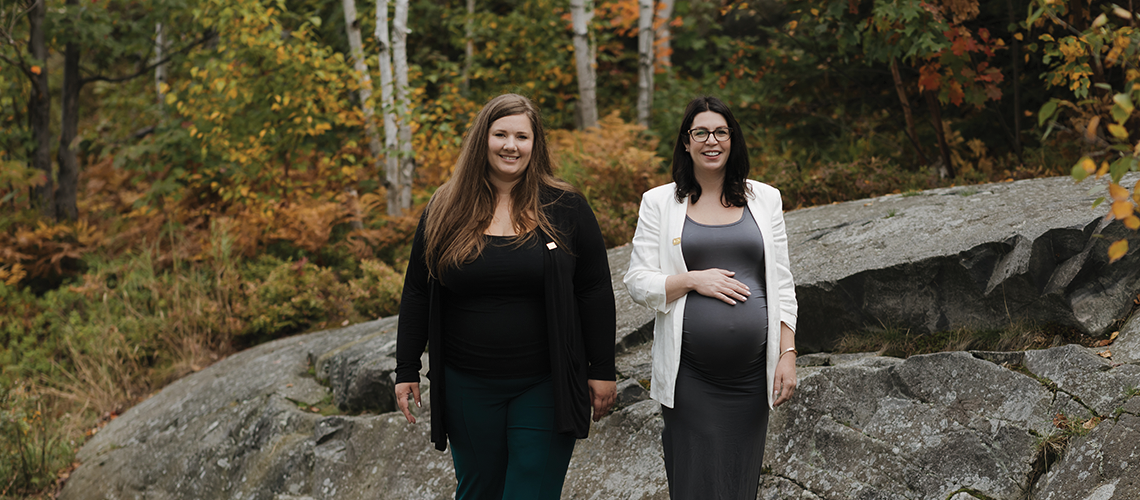
Shortly after RN Caroline Miller gave birth to her first child nine years ago, she began experiencing intrusive thoughts that made life debilitating at times. She would lie awake at night planning how she’d rescue her child from her car if she suddenly drove off the road. She was scared to do dishes in case she dropped a sharp utensil near her child. She was nervous to go down the stairs while holding her baby in case she fell.
Miller was experiencing postpartum depression and anxiety but had to languish on a waitlist for the one and only perinatal mental health program that her Sudbury hospital offered. It wasn’t until after she welcomed her second child three years later that she was finally referred to the program, diagnosed and prescribed medication. “I look back and think ‘wow, there was no support for me,’” Miller says. “There was nothing other than medication that I had access to.” This speaks to the “large gap in perinatal health services in Northern Ontario,” she adds.
At the time, Miller was working as a cardiac nurse at Health Sciences North in Sudbury. Her personal experience led her to change direction and pursue psychotherapy to provide moms with the much-needed perinatal health support she didn’t get.
In January 2022, Miller began working independently, helping new moms understand the source of intrusive thoughts and fears as a way to heal. “By the time I got started on medication, I was…just about suicidal,” she recalls. “To be able to prevent people from getting to that place and tell them there is a light at the end of the tunnel is amazing.”
According to the Canadian Mental Health Association, approximately 23 per cent of Canadian mothers experience postpartum depression or anxiety disorders.
RNJ ACCESS
You are only one quick step away from full access to all RNJ content.
Already an RNAO member? Log in