RN helps future physicians by acting as patient
RNAO member and RN Patrick Bélec has been volunteering as a standardized patient at Northern Ontario School of Medicine (NOSM) University since 2021. As a standardized patient, he plays the role of a “real” patient for medical students who need to strengthen their clinical skills before graduating. As a volunteer, Bélec is trained to simulate a set of symptoms or a particular health condition to help medical students become more skilled at taking patient histories and performing physical exams. He says he was encouraged to become a volunteer by a fellow student while in nursing school. He says that the role is just as useful for him as a nurse because it provides him the opportunity to be in a different role within a health-care setting. “It gives me an idea on how doctors are formed and I get to see the other side of the gurney. I have always been involved in education and I love teaching.” (The Sudbury Star, Nov. 19)
Arbitrator’s ruling grants hospital nurses pay increase
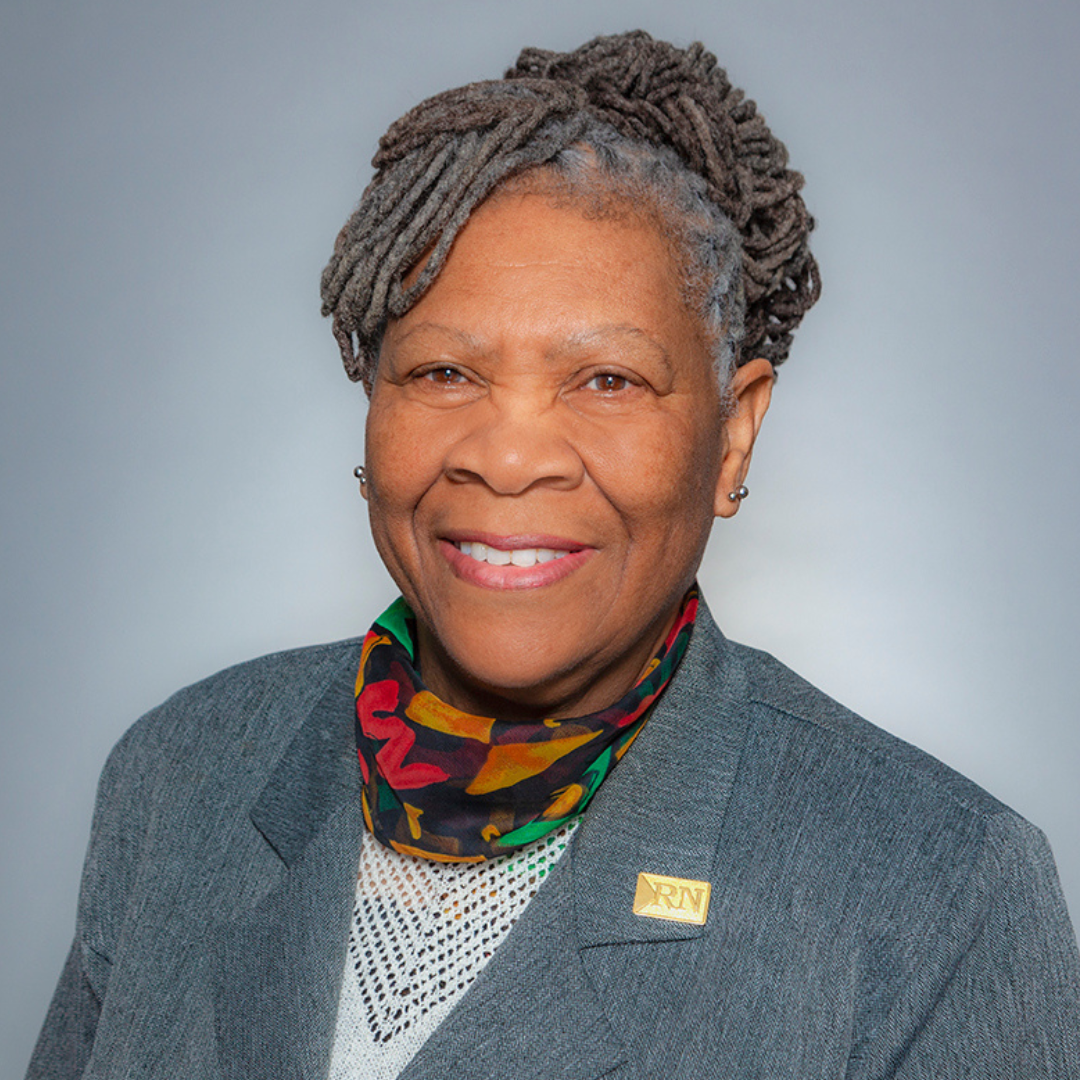
On July 20, arbitrator William Kaplan ruled that Ontario’s hospital nurses will receive a wage increase of approximately 11 per cent, on average, over the next two years. RNAO issued a media release in response to the news, highlighting that increased compensation is the first recommendation in our Nursing Career Pathways report. In a radio interview on CityNews 570, The Mike Farwell Show (July 24), RNAO President Dr. Claudette Holloway said “This is a significant step in the right direction to show value for nurses. This is a great start to help nurses stay in Ontario and we want to continue to see steps to build nurses’ careers here in Ontario.” Noting this agreement only covers hospital nurses, and that there is so much more that needs to be done, Holloway congratulated the Ontario Nurses’ Association (ONA) on its robust role representing nurses in the arbitration process, and committed that RNAO will continue urging government to strengthen retention programs. Speaking about other steps to address the challenges in health care, Holloway discussed the need to further increase seats in nursing education, offer more bridging programs for RPNs to become RNs, fund NP-led clinics, and hasten the utilization of NPs in long-term care. Holloway also spoke on Zoomer Radio about the announcement and its effect on nurses. “Nurses, like everyone else, have to make a living and support their families. But it’s about more than just the money for nurses,” she said. This “acknowledgement that there is a nursing crisis” will certainly attract nurses back and show them that they are valued after so many years of governments refusing to compensate them fairly, Holloway added. (Zoomer Radio, July 24)
The high cost of the nursing shortage*
Staffing shortfalls across the health system mean hospitals are relying more and more on private agencies to help fill the gap. Markham Stouffville Hospital emergency department RN Basil Byfield knows firsthand that it’s been tough to retain staff. During his 30-year career in emergency nursing, Byfield says that he has seen the downside of this stop-gap solution, and in particular, the downside of a divided workforce. On the issue of wage parity – agency nurses can sometimes earn more than double what staff nurses earn – he notes: “It can be demoralizing for regular staff having to do the same job but getting less pay.” RN Kian Johnson says she originally picked up shifts through an agency to supplement her full-time hospital job. She is now studying to become a nurse practitioner and is exclusively working for an agency. The impetus, she says, was the flexibility it allowed, “…as well as the financial increase.” Since December 2020, RNAO has raised the alarm about the nursing crisis that will compromise patient safety and the functioning of our health system. We are now deep in that crisis, and this trend toward more agency nurses is only exacerbating the issues. “I feel like we’re not respected in the sense that our needs are not being met,” Kian says. (CBC The National, May 12). Read below for more about how members of RNAO’s Middlesex Elgin chapter are continuing to raise alarm bells on the wage parity issue with MPPs in their own community.
Middlesex Elgin chapter meets with MPPs for Take Your MPP To Work (TYMTW) event
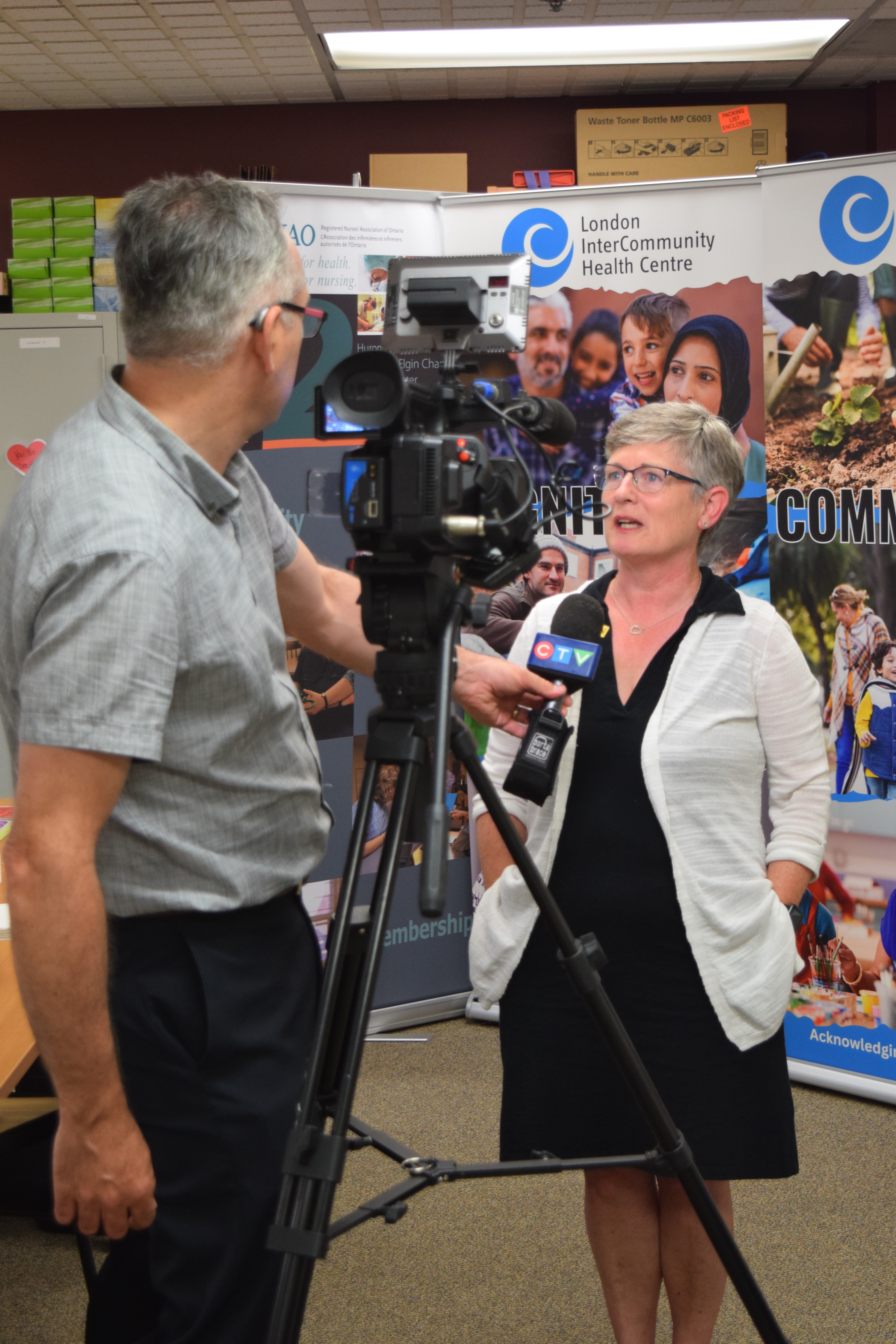
RNAO’s Middlesex Elgin chapter hosted a Take Your MPP To Work (TYMTW) event at London’s InterCommunity Health Centre on July 6, where members discussed the nursing shortage and the need for wage parity across acute care and community care settings in Ontario. Comparing 2022 salaries for unionized nurses in hospital with unionized nurses in the community (specifically those working for the Victorian Order of Nurses), the latter are paid anywhere from six to 30 per cent less, depending on years of service and bargaining unit. “People tend to go to the job that is better paying,” chapter president Janet Hunt says. “It would be nice to see community nurses paid what their value is.” During her discussions with MPPs, Hunt also highlighted the importance of allowing RNs to prescribe some medications, which would allow community nurses “…more independence in prescribing some small medications that their patients may need.” RNAO has been advocating for RN prescribing for more than a decade, and continued its advocacy for movement on this important practice change when nurses were at the legislature for Queen’s Park Day (QPD) in March (read more about the event in our QPD feature in this issue). This Middlesex Elgin TYMTW event was another opportunity to advocate. NDP MPPs Teresa Armstrong and Terence Kernaghan, and PC MPP Rob Flack attended, and assured nurses they would take their concerns back to Queen’s Park. For resources and fact sheets pertaining to understaffing and other key issues that RNAO continues to advocate with MPPs, visit Queen's Park Day. (CTV News London, July 6)
*NEW* Transitions in Care and Services best practice guideline
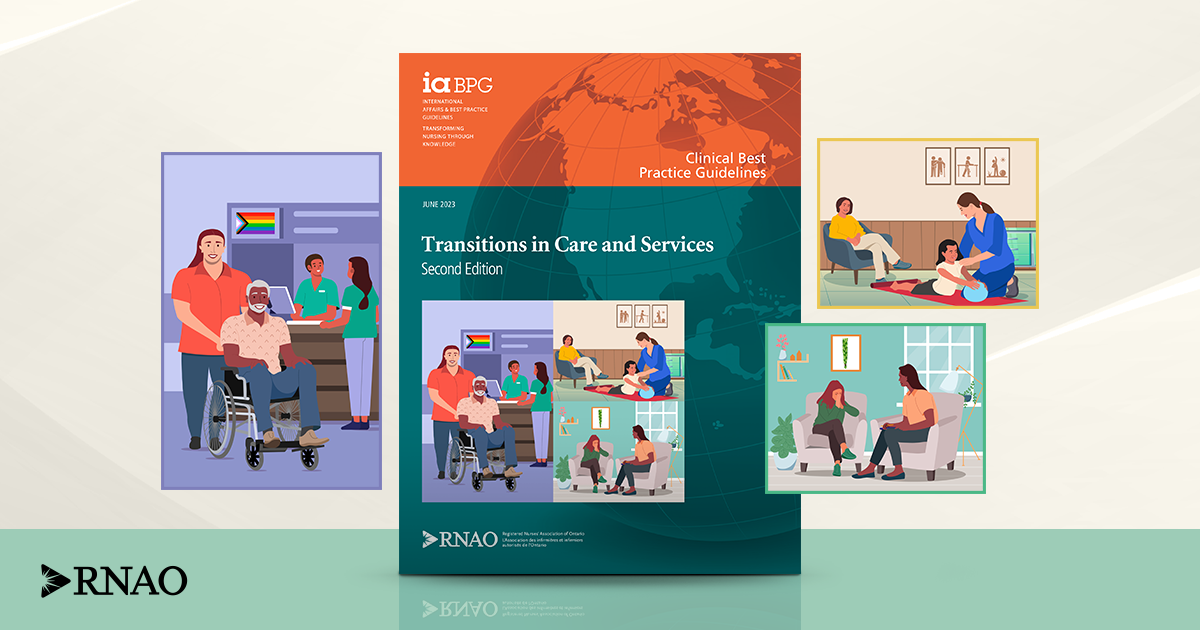
At RNAO’s 98th Annual General Meeting (AGM), the association released the second edition of its foundational best practice guideline (BPG), Transitions in Care and Services. It is meant for nurses and other health providers working in primary care, acute care, home and community care, long-term care, rehabilitation, correctional facilities, shelters and mental health and substance use health settings. This guideline, developed by an expert panel in partnership with people with lived experience, is central to the work of Best Practice Spotlight Organizations® (BPSO) and Ontario Health Teams (OHT), and includes evidence-based recommendations to support safe and effective transitions in care for children and adults and their support networks.
View the BPG for free by downloading a digital copy. For more on this and other highlights from the 2023 AGM, visit AGM 2023.
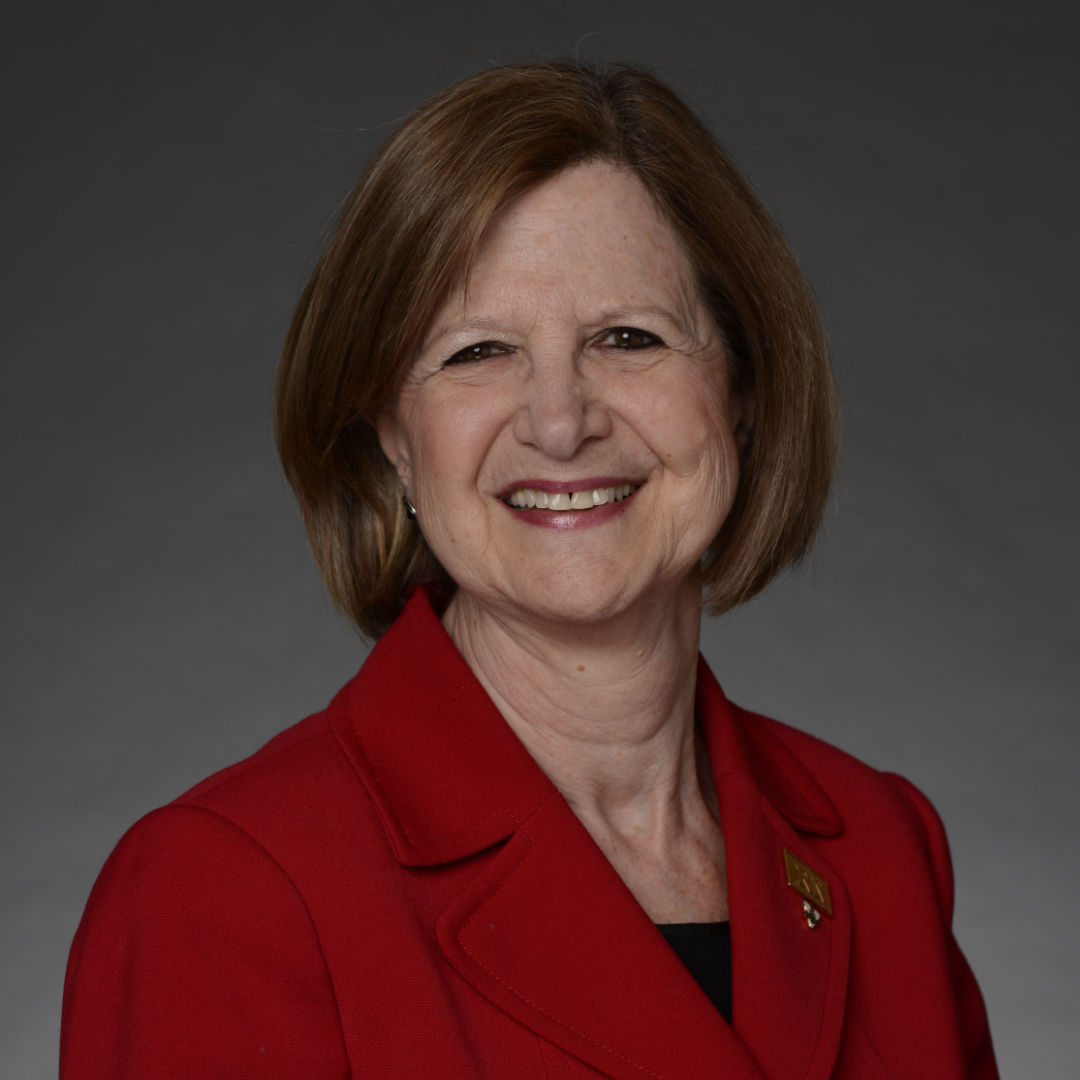
CIHI report highlights impact of staffing shortages, surgical backlogs, and more
A Canadian Institute for Health Information (CIHI) report released Aug. 2 highlights a lack of adequate staffing is affecting the health system across all sectors and populations, and in particular primary care and surgeries. “It shows that surgical procedures are being delayed. Yes, there was a pandemic, but the other reason is because they don’t have enough RNs for ICUs, operating rooms and emergency rooms,” RNAO CEO Dr. Doris Grinspun told The Sam Laprade Show (Aug. 2). In children’s hospitals, it is impacting wait times for surgeries, with some young patients waiting well beyond the recommended timeframe for much-needed care. Hamilton’s McMaster Children’s Hospital indicates there are more than 2,400 children waiting for surgeries. In an interview with CHCH News (July 21), Grinspun said: “I’m not surprised about what’s happening in children’s hospitals.” There is “insufficient funding for programs related to children, whether it’s surgical, community care (or) home care.” The funding these hospitals receive from the government is “absolutely deficient,” she added. The backlog speaks to the continued need to advocate to retain and recruit nurses in all sectors of the health system.
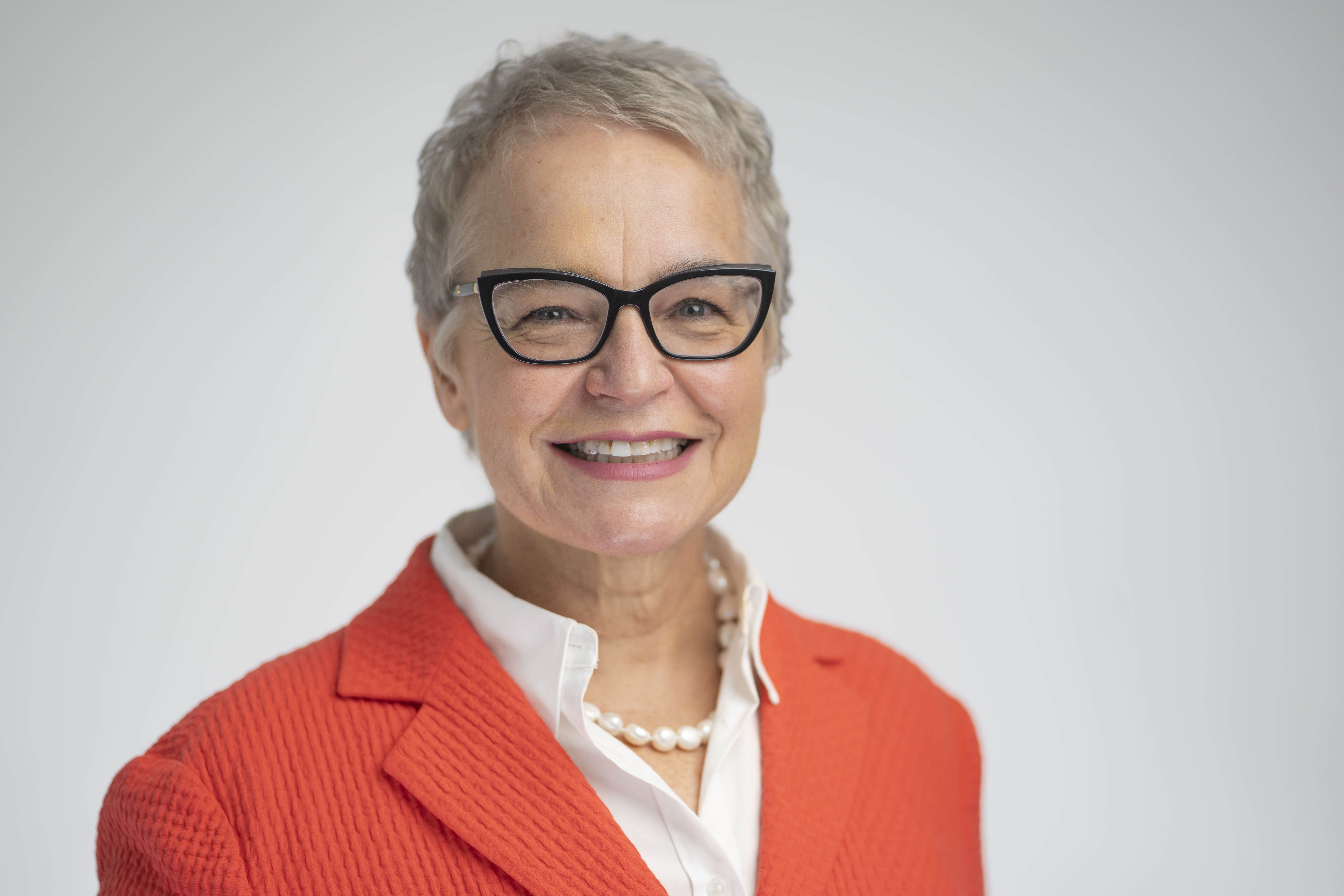
Keeping public health nurses in schools
Government funding for Ottawa Public Health (OPH) to employ more public health nurses in schools during the pandemic came to an end in June 2023 (as it did with all public health units across the province). RNAO has been vocal about keeping nurses in schools, and asked for the funding to become permanent (read more in the Fall 2020 issue of RNJ and in Doris’ COVID-19 Blog). Although further funding has not been announced, RNAO continues its advocacy on this issue. OPH is also continuing its focus on keeping schools healthy. The city will transition from more than 40 “school focused” nurses in 2022/23 to two nurses who will work across four school boards. Prior to the pandemic, the public health agency had 16 nurses. Esther Moghadam, chief nursing officer and director of health promotion at OPH, says she would like to return to those levels, “…but in a different way and, I am hoping, a better way.” OPH, Moghadam explains, will focus on providing students with in-school immunizations, dental screenings, infection prevention and control and mental health. It will also shift resources into wellness hubs in less advantaged neighbourhoods. OPH also plans to offer more digital health education and teacher-training sessions. “I don’t want people to think we are not in schools,” Moghadam reiterates. “We are still in schools.” (Ottawa Citizen, May 25)
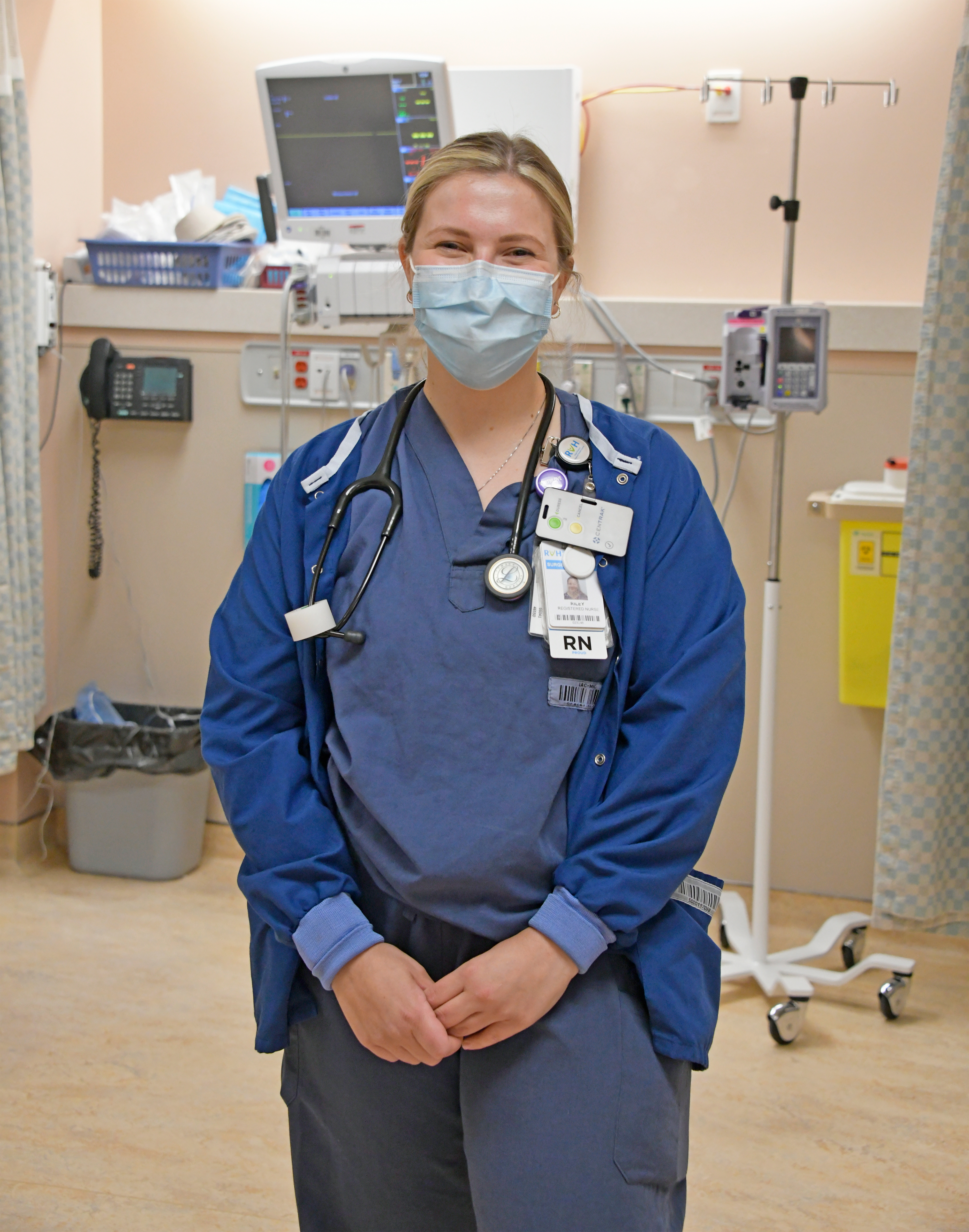
Proud to be part of the profession
In honour of Nursing Week 2023, RN Riley Smyes, a post-anaesthesia care unit nurse at Royal Victoria Regional Health Centre (RVH), spoke with BradfordToday.ca (May 12) about her experiences in nursing since graduating from Laurentian University in 2019. Although early in her career, she has enjoyed the challenges so far – even during a global pandemic – and says she wouldn’t change a thing. After spending time working in the surgical inpatient unit, she decided to join the cancer palliative inpatient unit. “I ended up going back to Surgery 2 where multiple times throughout COVID we would be reassigned to a new specialty due to outbreaks throughout the hospital.” Working in the hospital setting is difficult, she says, but her team is always able to come together and support each other. “This is what makes me proud to be a nurse and proud to be in a profession where we bind together and with every challenge, we only get stronger.” For more stories of members in local and national news during Nursing Week and beyond, visit RNAO in the news.

RNAO marches in Toronto Pride parade
On June 25, RNAO joined thousands marching in the Toronto Pride parade. The event happens annually to celebrate diversity and the 2SLGBTQI+ community. RNAO CEO Dr. Doris Grinspun marched alongside 50 members and staff to show support and solidarity. The association’s participation in the Toronto event dates back to 1997. RNAO’s Rainbow Nurses Interest Group (RNIG) has been a special interest group of the association since 2007. Watch videos from the parade on RNAO’s X (formerly Twitter) feed. And learn more about RNAO’s ongoing work with the 2SLGBTQI+ community in past issues of RNJ and on our In Focus page.
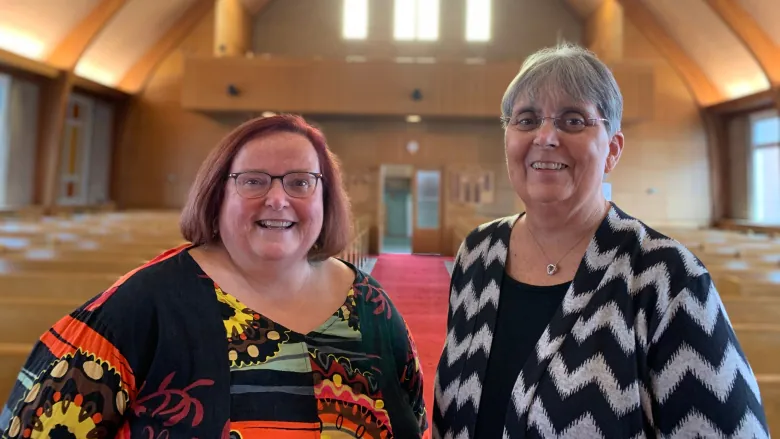
Providing nursing and spiritual support
Parish nursing allows nurses to link their health-care knowledge and expertise with spiritual support and guidance for members of the parish community. Parish nursing is a designation that can be achieved through special courses offered by some universities and seminary programs. RN Jan Linner (right, in photo) retired last year as the parish nurse at Lambeth United Church in London. She says this type of nursing focuses on “holistic health, and we help people with preventing diseases and help tolerating their diseases.” In the role, Linner led workshops on a range of topics, including organ donation and first aid/CPR. Alongside other volunteers, she also speaks one-on-one with parishioners experiencing loneliness or living through grief. During the pandemic, Linner had volunteers help call each family in the congregation to ensure they felt supported, and had what they needed to get through a challenging time. She reached out to 180 families herself. “People were really thankful for those phone calls,” she says. The role was assumed last year by Barb Sutherland, also a retired RN (left, in photo) (CBC News London, April 10).