NPs advocate for medical marijuana
Following the legalization of recreational cannabis in October, more Canadians may be looking to experiment with it for its medicinal benefits. NP Morgan Toombs, CEO of O Cannabis, Canada’s only NP-led medical cannabis clinic, says it has already helped nearly 10,000 Canadians with their cannabis needs (e.g. how to use it safely and effectively). Toombs says her clients prefer a “natural” medicine, and are seeking medication that can work without side effects. “The feedback that we’ve been getting is just extraordinary,” Toombs says. “This is really why we all do the work that we do. People are getting better with medical cannabis and it’s so rewarding to hear their stories.” Toombs says NPs are filling a gap created by this new treatment option, and are serving the patients who want to try it. “Patients who have tried everything, and they’ve had a really hard time finding the right medicine … will have often approached their doctors and are not able to get access,” Toombs says. Physicians may sometimes feel uncomfortable prescribing medical cannabis, she says, so patients come to a clinic like hers to get more information and care. (CTV News, Nov. 17)
Nurse becomes regional VP
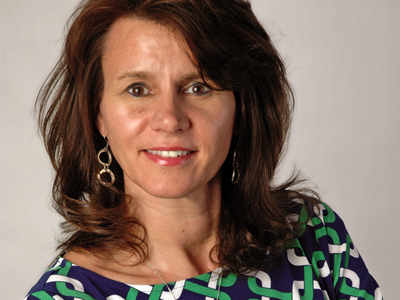
A long-time RNAO member and former emergency department RN is now leading cancer services and medical research in Ontario’s north. On Dec. 10, Maureen McLelland began her duties as regional vice-president for Cancer Care Ontario’s North East Regional Cancer Program at Health Sciences North (HSN). She also began her duties as hospital vice-president and chief operating officer for its research institute. In her role for Cancer Care Ontario, McLelland oversees the quality and delivery of cancer services for the residents of Algoma, Cochrane, Manitoulin-Sudbury, and other northern cities. She also leads a clinical portfolio of more than 700 employees. McLelland says it is a “privilege to work collaboratively with regional partners to further the goals in the Regional Cancer Plan and Ontario Cancer Plan, and to champion…efforts (at HSN) to be more socially accountable and grow our research impact.” (Sudbury Star, Nov. 3)
People living with diabetes celebrated for courage
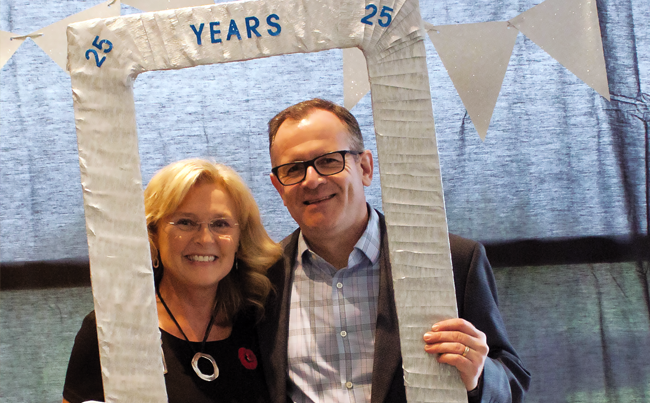
In early November, as many as 250 people gathered in Norfolk to mark the 25th anniversary of the diabetes program at Norfolk General Hospital. “You have arrived and survived, and most importantly, you have thrived in spite of it all,” Cindy Gekiere, diabetes program co-ordinator across Haldimand and Norfolk counties, told attendees during the celebration. Gekiere added she is humbled by the courage and strength of those living with diabetes, and their commitment to lifestyle changes to help control blood sugar. Many people living with diabetes today monitor their blood-sugar levels with a wrist watch-like device. Not long ago, patients monitored their blood sugar with a blood test, notes Gekiere. There are four registered nurses, three registered dieticians, and two clerks who care for 5,500 clients on the program’s database. In addition to care, the program offers its Sugar Scoop newsletter, which provides subscribers with up-to-date information about diabetes management. (Simcoe Reformer, Nov. 20)
Lessons in human trafficking
It is vital for parents and children to communicate with one another in order to stop human trafficking, says Huron County Health Unit RN Johanna Calamusa. The public health nurse was participating in a human trafficking awareness presentation at Exeter’s South Huron District High School in October when she told attendees that “(children) will talk if you listen.” It’s the parents’ job to be educated about human trafficking, she adds. The event, hosted by the health unit in collaboration with other organizations, including Victim Services Huron County, was created to teach parents and students about human trafficking, who is vulnerable, and how to identify signs that someone may be victimized. Calamusa encourages families to have meals together every day as a way to connect and build structure in the family. Parents should also teach their children what healthy relationships look like, she notes. (The Mitchell Advocate, Oct. 25
Less accessibility in northern Ontario
The cancellation of Greyhound trips in Western Canada and northern Ontario is causing health concerns for those in the affected communities. In Ontario, the move affects seniors who can no longer drive to their medical appointments. Since Nov. 1, Greyhound stopped service between Sudbury and Thunder Bay, affecting cities like Sault Ste. Marie and Terrace Bay. Carol Huard, chief nurse at Thunder Bay’s McCausland Hospital (Terrace Bay), says the change makes it difficult for people in these rural communities. “We have a lot of elderly people. We have a lot of people who don’t like to drive in the city anymore. They would essentially be stranded without the Greyhound,” says Huard. In Terrace Bay, more than half of the 1,600 residents are 50 years or older. Some can no longer drive or rely on their children, who have gone to work in the big cities, adds Huard. (CBC Northern Ontario, Oct. 26)
Patient ombudsman position on the line
Ontario’s patient ombudsman may be no more after speculation at Queen’s Park that Premier Doug Ford does not intend to fill the vacancy. The patient ombudsman is in charge of ensuring the voices of patients and caregivers at hospitals and long-term care homes are heard. The role was previously filled by Christine Elliott, who left in February to run for the leadership of the Ontario Progressive Conservative Party and later became health minister. RNAO CEO Doris Grinspun says the position should not be eliminated. “The public needs to have a point-of-contact to speak about health system experiences and improvements. We have a lot to learn from the public and, at the end of the day, they are recipients of the care,” Grinspun says. The public has increasingly been using the office since it opened in 2016. In its first year it received 2,000 complaints. In 2017, that number went up to 2,300. Between July and October 2018, the patient ombudsman has taken 850 complaints, a higher monthly average than the year before. If the position is not filled “a voice will be lost – the voice of the public,” says Grinspun. With the top job vacant, the office still has 17 staff, including early resolution specialists, investigators, and other administrative staff. (CBC News, Dec. 4)
Hospitals need more funding
Concerned nurses and members of the public gathered in Sudbury on Nov. 12 for a town hall meeting hosted by the Ontario Health Coalition. RNAO member emeritus Dot Klein, head of the Sudbury Health Coalition, says she has seen a lot of change in the health system over four decades as a nurse, but never “the level of care we have here now.” The ruling practice in hospitals, she says, is to “…get the job done for the least amount of money.” This leaves RNs vulnerable to budget cuts. Health Sciences North (HSN) has cut positions at the hospital this year. “This is unsafe and puts both patients and staff at risk,” says Klein. The hospital is always running at more than 110 per cent capacity, she adds. In November, RNAO responded to a Canadian Institute for Health information (CIHI) report that found Ontario is the second-lowest per capita spender on hospitals in Canada (see more in Policy, page 22). On Dec. 11, hospital spokesperson Jason Turnbull announced that after several months of working with unions, retirement incentives, attrition and other measures, there are “no plans for a further round of layoffs at HSN.” (The Sudbury Star, Nov. 13)
New RN programs coming to the north
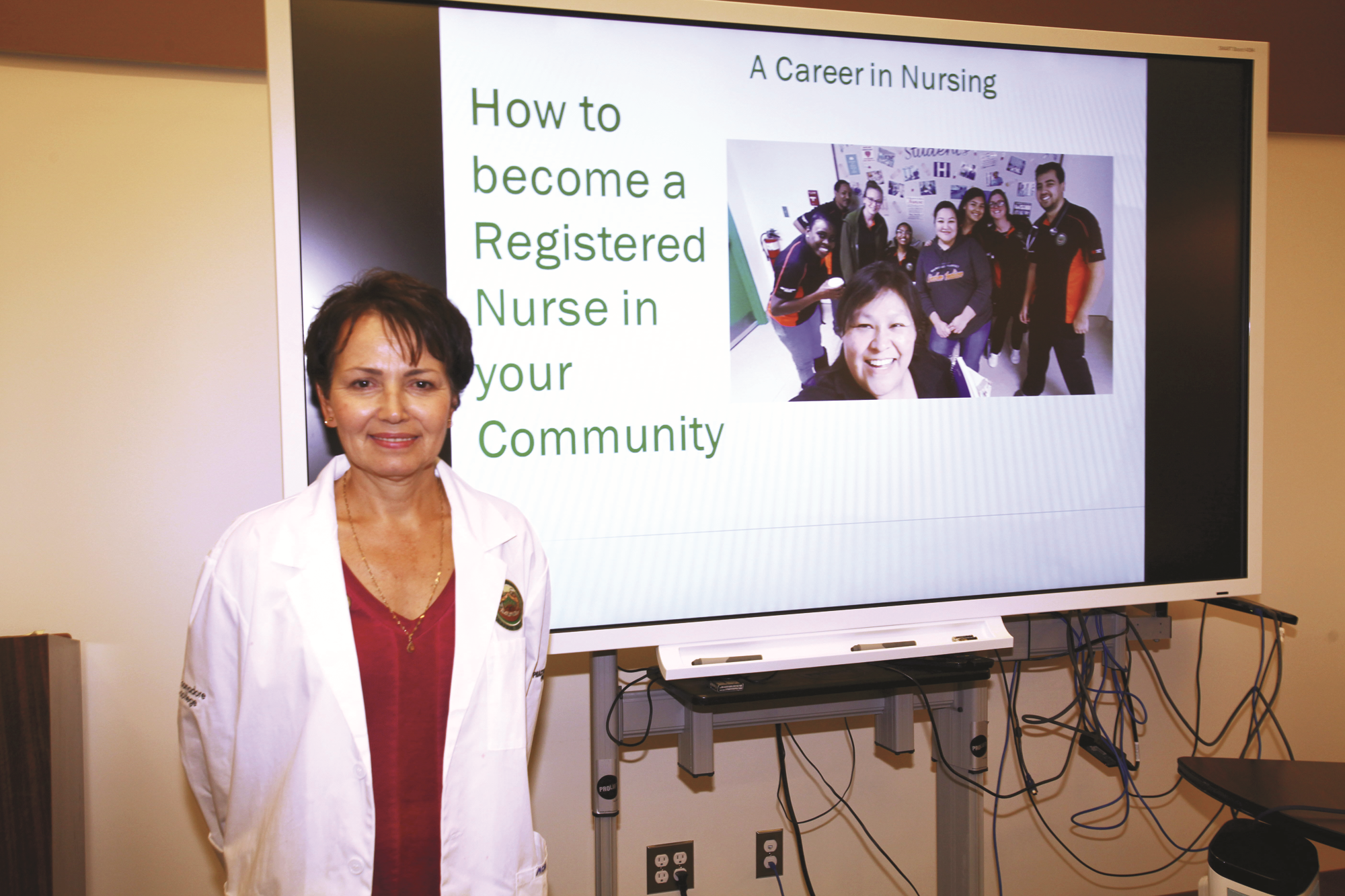
In hopes of recruiting more RNs to northwestern Ontario, the Seven Generations Education Institute in Thunder Bay is introducing two new nursing programs. Coming in the fall of 2019, the All Nation Nurses Entry Program will provide students with the skills and knowledge to proceed to the next level of their education as a health professional.
In the fall of 2020, students can apply for the new Bachelor of Science in Nursing Program, which will be offered collaboratively by Seven Generations Education Institute and Lakehead University. “We certainly need practical nurses, but we need registered nurses in this area as well to serve our people,” says RN Brigitte Loeppky, post-secondary co-ordinator for Seven Generations. Bringing educational opportunities to the region is important, Loeppky says, since some students will not pursue further education if it is not offered in the community. “We believe in equitable education for all, so why not bring the education to them?” (The County Weekly News, Nov. 9)
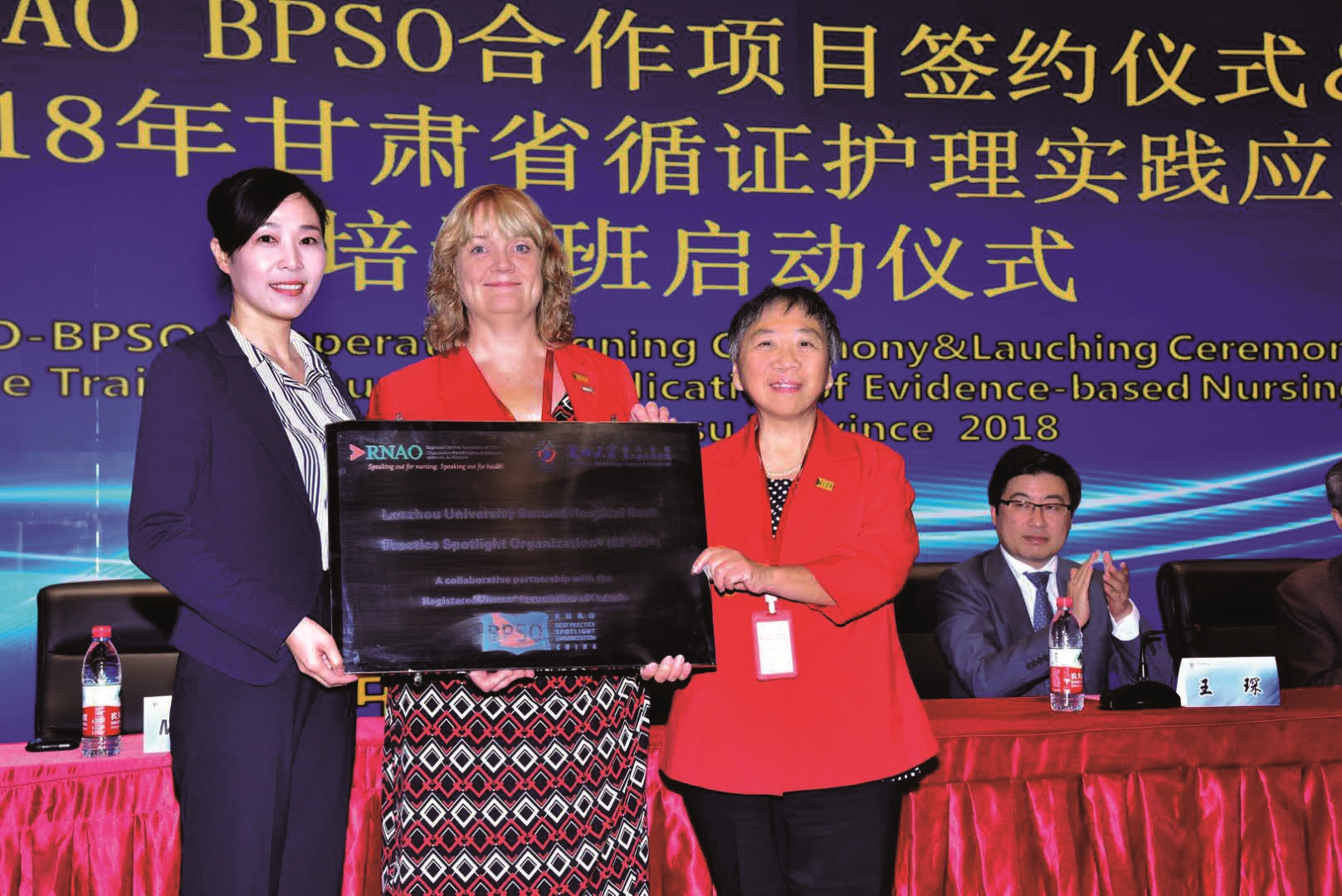
RNAO visits the Philippines and China
In August and September, representatives from RNAO were invited* to visit BPSOs in Negros, an island in the Philippines, and China.
In Negros in August, Suman Iqbal, senior manager for the Long-Term Care Best Practices Program, was joined by Beatriz Jackson, who is an alumni of the island’s Silliman University Medical Center (SUMC). Jackson spearheaded the efforts for SUMC to become the first Best Practice Spotlight Organization (BPSO) in that country.
Dumaguete, a town on the island’s east coast, was built around SUMC, and hosts an annual parade to celebrate the school and hospital. It used the occasion this year to thank RNAO for the historic partnership. SUMC selected three guidelines for implementation: breastfeeding, pressure injuries and vascular access.
In September, RNAO IABPG Associate Director Heather McConnell and Toronto Public Health BPSO co-ordinator May Tao delivered a four-day orientation to Lanzhou University in central China, which is beginning its work. They also conducted audits at Peking University First Hospital and China-Japan Friendship Hospital, both in Beijing.
McConnell says she is struck by how dedicated and systematic the Chinese hospitals are: “They’re extremely committed to improving nursing practices and patient outcomes.”
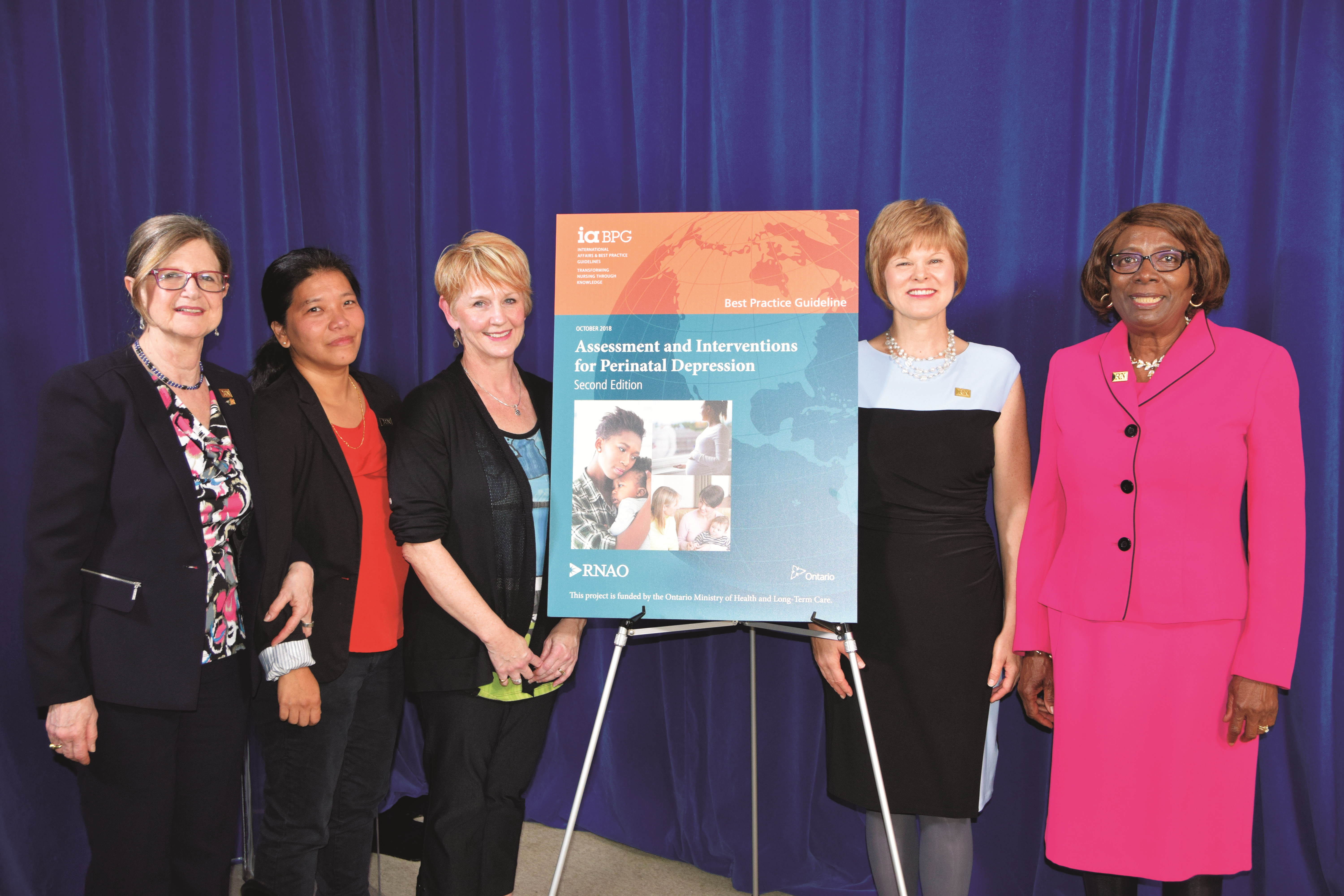
Two new and improved BPGs
In October, RNAO released Assessment and Interventions for Perinatal Depression. This second edition BPG expands on the original, focusing not only on persons who suffer depression after giving birth, but also those affected while pregnant. The newer edition includes comprehensive, evidence-based recommendations on how to screen, assess, prevent, intervene and evaluate perinatal depression. Routine screening for risk of perinatal depression is one of the key recommendations.
Earlier this fall, RNAO also released Promoting and Supporting the Initiation, Exclusivity and Continuation of Breastfeeding for Newborns, Infants and Young Children. This BPG is a third edition, and goes beyond a focus on newborns and infants to include young children up to age two.
Among its recommendations: when possible, infants receive breast milk exclusively during the first six months of life; and breast milk continues to be a component of diet through a child’s second birthday or longer. Improving breastfeeding practices worldwide could save the lives of 820,000 infants and young children each year, research shows.